27 August 2026
"Interlude vs High Five: the holy war that built the Lineage II scene"
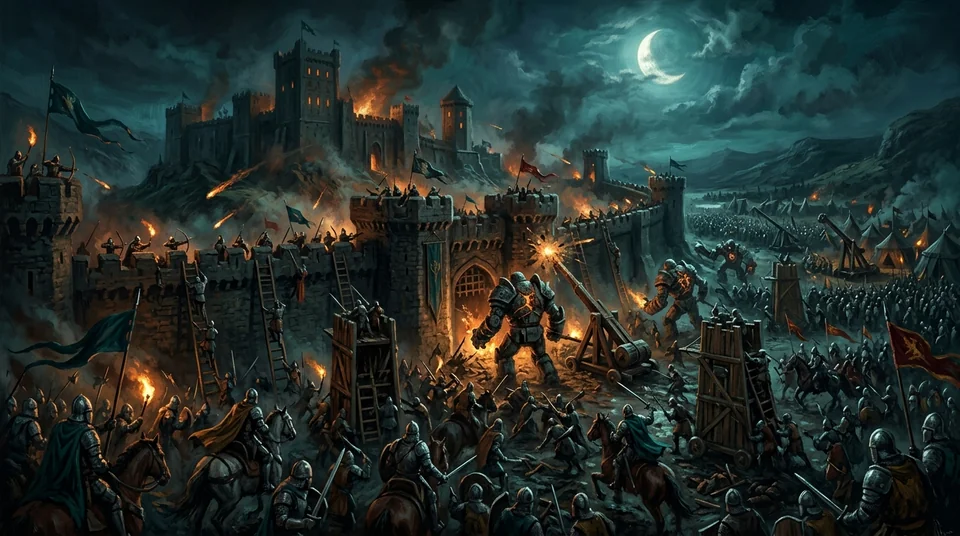
Ask ten Lineage II veterans which chronicle was the real game and you'll start eleven arguments. Interlude purists will tell you everything after 2007 was feature creep. High Five players will tell you Interlude is a museum piece with three viable classes. Both will tell you, at length, why the other side is wrong — and both will be online this Saturday for sieges, on separate servers, convinced theirs is the true Aden.
What the fight is actually about
Interlude — Chronicle 6, released in 2007 — is the distilled version. No elemental attributes, no vitality system, no instanced raid trains. You level, you subclass, you augment a weapon, you fight over castles and Olympiad heroes. The economy runs on craft: dwarves spoiling materials, warsmiths rolling the dice on S-grade, and a B-grade weapon on a fresh server genuinely meaning something for its first weeks. It's a game where the meta is known down to the last percentage, which is exactly why people love it. Nothing is coming to save you or ruin you. The book is closed, and everyone has memorized it.
High Five is the opposite philosophy: the classic line's final, most polished patch before Goddess of Destruction rewrote the game. Instanced epics like Freya and Frintezza, refined class balance, more to do at level cap than any earlier chronicle. It's Interlude with fifteen extra systems bolted on — and depending on who you ask, that's either depth or bloat.
Neither side is wrong, which is why the war never ends. They want different games that happen to share a client family.
The fork that ate the world
None of this scene exists without L2J. In the mid-2000s, a group of hobbyists started reimplementing Lineage II's server in Java, from scratch, in the open. It was buggy, incomplete, and free — and that last part changed everything. Anyone with a rented VPS and a weekend could stand up a realm. L2J forked, and the forks forked: L2JFree, aCis, Lucera, Sunrise, Mobius, and hundreds of nameless repacks traded on forums like baseball cards. An entire technical culture grew out of one open-source emulator, complete with its own economy of paid "packs," geodata sellers, and developers-for-hire.
Then there are the L2OFF servers — realms running on leaked official NCSoft binaries. Purists swear by them: real formulas, real behavior, no emulator quirks. They're also rigid, harder to modify, and legally radioactive even by private-server standards. The L2J-versus-L2OFF argument is the scene's second holy war, quieter than the chronicle fight but just as permanent.
What L2J really did was democratize failure. Running an L2 server became cheap enough that thousands of people tried it, and the 99% who failed taught the 1% what actually works. Every quality-of-life convention the scene now takes for granted — offline shops, vote rewards, automated events, buffer NPCs on high-rates — was invented by some forgotten server in 2009 and copied forever.
The scene in 2026
It never died. It just got very, very specific.
Open any L2 toplist today and you'll find 150 to 250 active servers, with new launches every week. The shape of the market barely changed in fifteen years:
- Low-rate Interlude and Gracia projects (x1 to x5) for the craft-economy crowd, often running for years on a few hundred loyal players.
- Mid-rate High Five (x25 to x50), the largest stable bracket, where most of the multi-year communities live.
- High-rate PvP realms (x500 and up) where you're level 80 in an hour and the real game is Olympiad and epics — these live fast and burn out faster, by design.
- Classic and Essence realms running NCSoft's own retro client lineage, which pulled a whole generation of players who'd never touch an old chronicle.
The international flavor is worth noting: like Silkroad, L2 was never just an English-speaking scene. Russian, Brazilian, Greek, and Eastern European communities make up a huge share of the players, and half the big launches advertise in three languages at once.
Why it persists
Lineage II was a game about scarcity in an era before games were afraid of it. Adena mattered. Materials mattered. Dying mattered — you could literally drop your weapon. Retail MMOs spent two decades sanding those edges off, and every player who missed the edges ended up here.
The chronicle wars look like a community that can't agree on anything. They're actually the opposite: a community that agrees so completely the game is worth preserving that it maintains a dozen different preserved versions at once, each with its own congregation.
If you have a chronicle you call home — or want to find one — the Lineage II rankings are voted on by the people still fighting over castles every weekend. Just don't ask them which chronicle is best unless you have an hour.